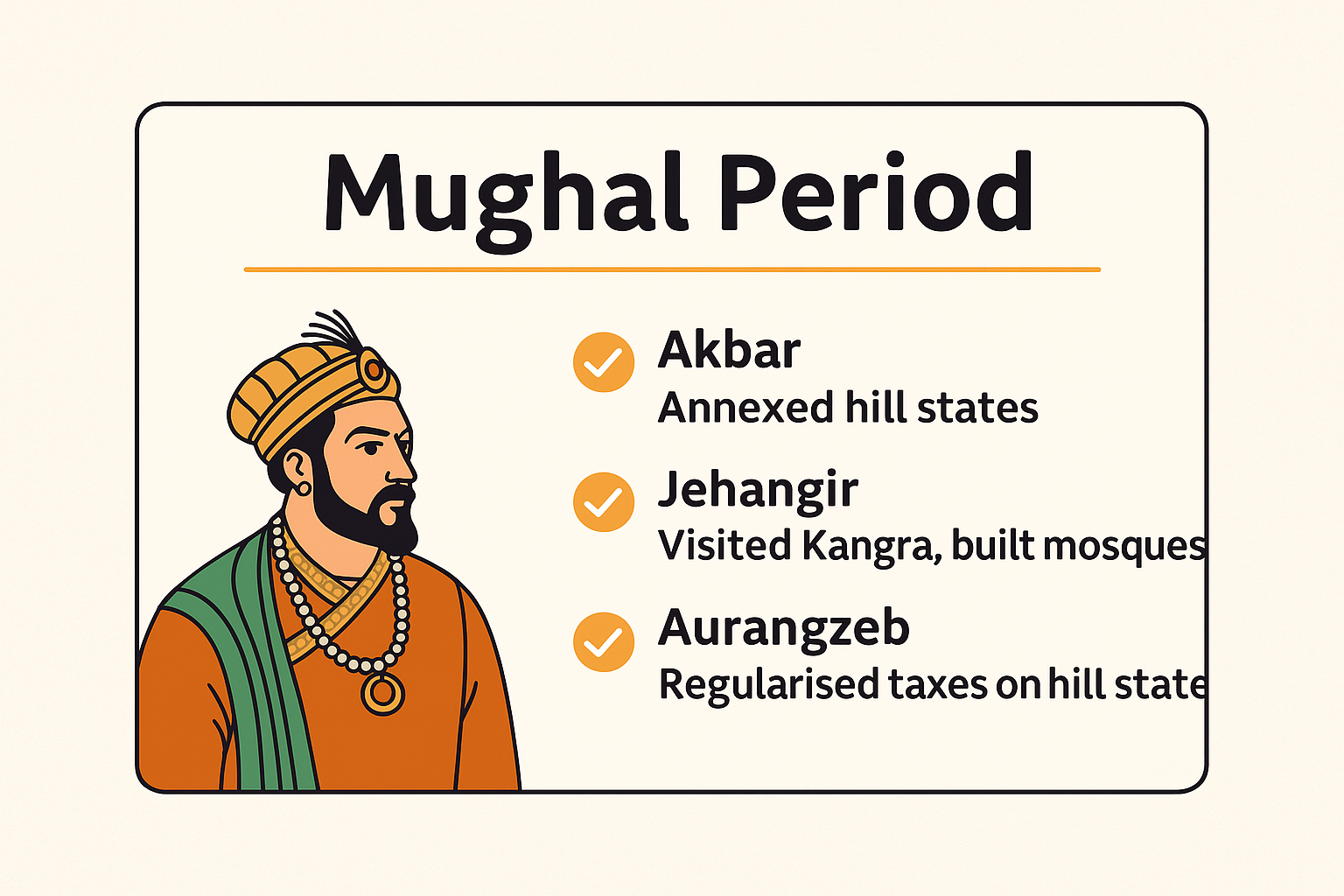
🕌Mughal Period

⭐1. Introduction

Mughal Period.png

The Mughal Period in Himachal Pradesh mainly covers the time from the 16th to early 18th century, when Mughal emperors tried to control the Kangra, Nurpur, Sirmaur, and lower hill regions.

The Mughals did not rule the entire Himachal, but they had strong influence on:

  • Kangra Fort
  • Trade routes
  • Temples and cultural exchanges
  • Hill state politics

⭐2. Early Contacts with Mughals

Early contacts with mughals.png

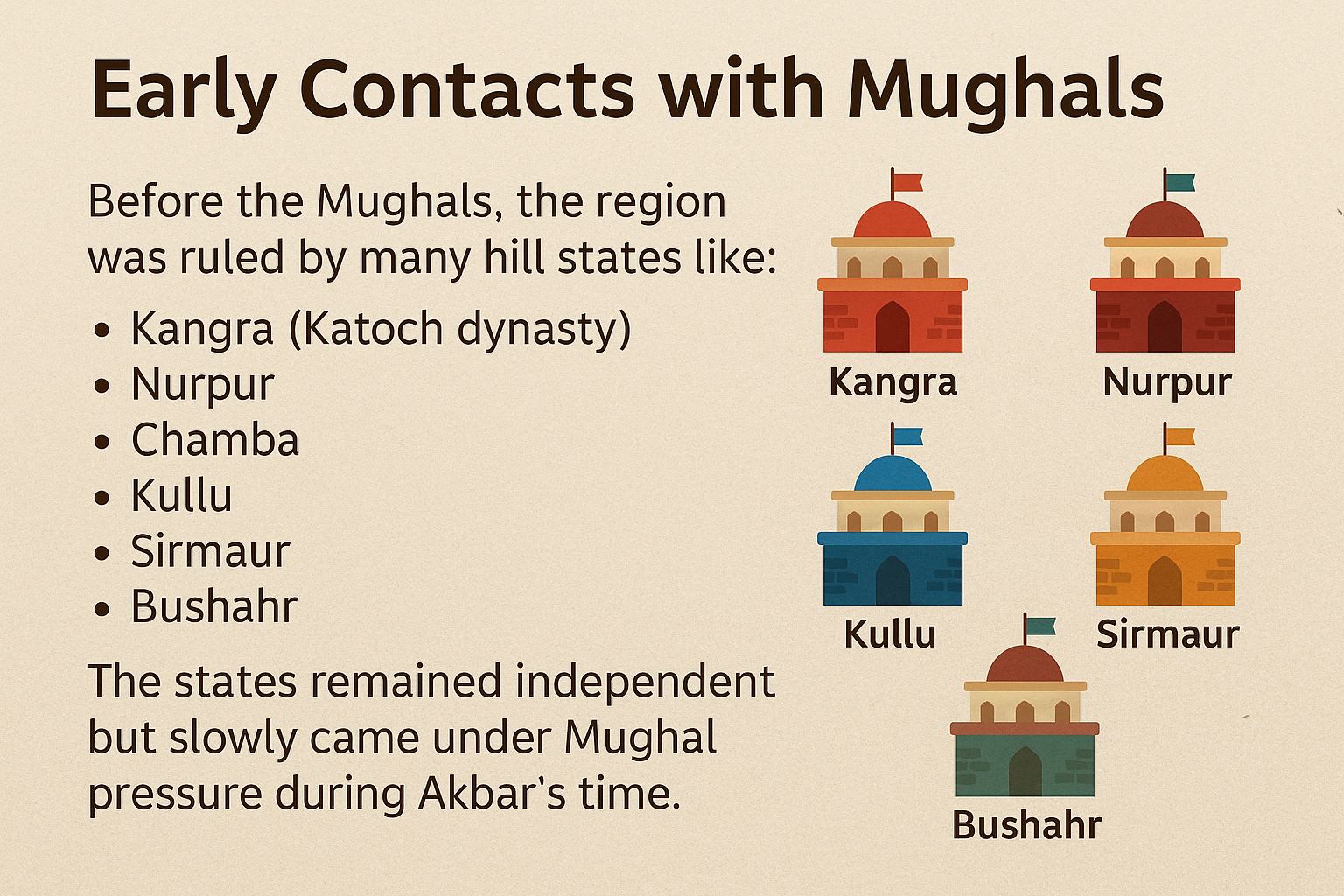
Before the Mughals, the region was ruled by many hill states like:

  • Kangra (Katoch dynasty)
  • Nurpur
  • Chamba
  • Kullu
  • Sirmaur
  • Bushahr

The states remained independent but slowly came under Mughal pressure during Akbar's time.


⭐3. Akbar's Period (1556-1605)

akbars period.png

✓What Akbar did in Himachal:

  • Tried to control Kangra Fort, but failed
  • Established diplomatic relations with local rulers
  • Took tributes (nazrana) from some hill princes
  • Controlled foothill regions indirectly

✓Kangra Fort:

Akbar wanted to capture the fort but could not.
The fort stayed under Katoch Dynasty.


⭐4. Jehangir's Period (1605-1627) - MOST IMPORTANT

jahangir's period.png

Jehangir's rule is the most significant for Himachal history.

✓Achievements in Himachal:

  • Captured Kangra Fort in 1620
  • Placed Mughal commander in the fort
  • Built mosques and Mughal structures near Kangra
  • Strengthened political control in the region

✓Why he wanted Kangra Fort?

Because it had:

  • Huge store of gold & treasure
  • Powerful political value
  • Strategic trade route location

⭐5. Shah Jahan's Period (1628-1658)

Shah Jahan's period.png

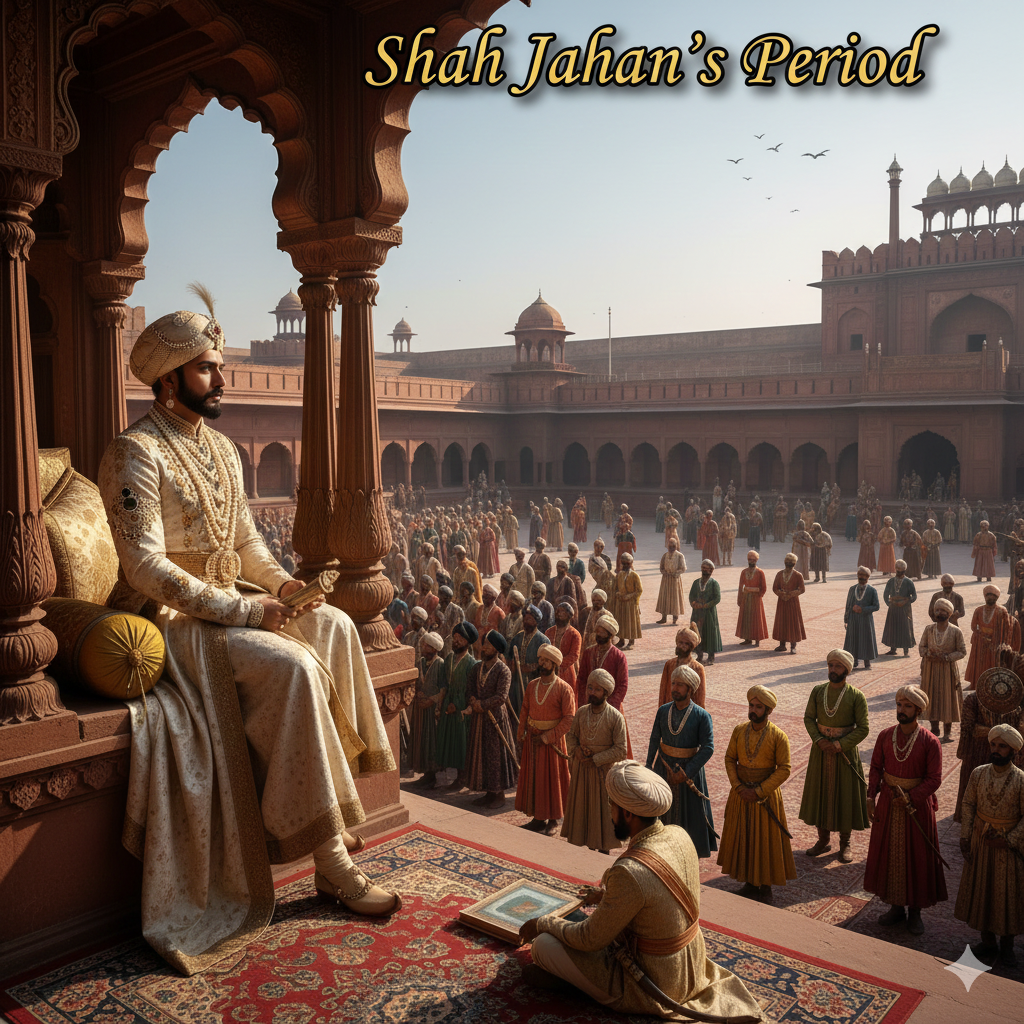
✓Policies:

  • Maintained control over Kangra
  • Encouraged art & architecture
  • Improved relations with hill rulers
  • Inspiration from Mughal art

Shah Jahan's period was more peaceful and artistic.


⭐6. Aurangzeb's Period (1658-1707)

Aurangzeb's Period.png

✓Influence:

  • Religious policies created tension in plains
  • Hill states remained mostly independent
  • Mughal control over Himachal became weaker

Aurangzeb sent some commanders towards hills, but success was limited.


⭐7. Decline of Mughal Power in Himachal

Decline of mughal power in himachal.png

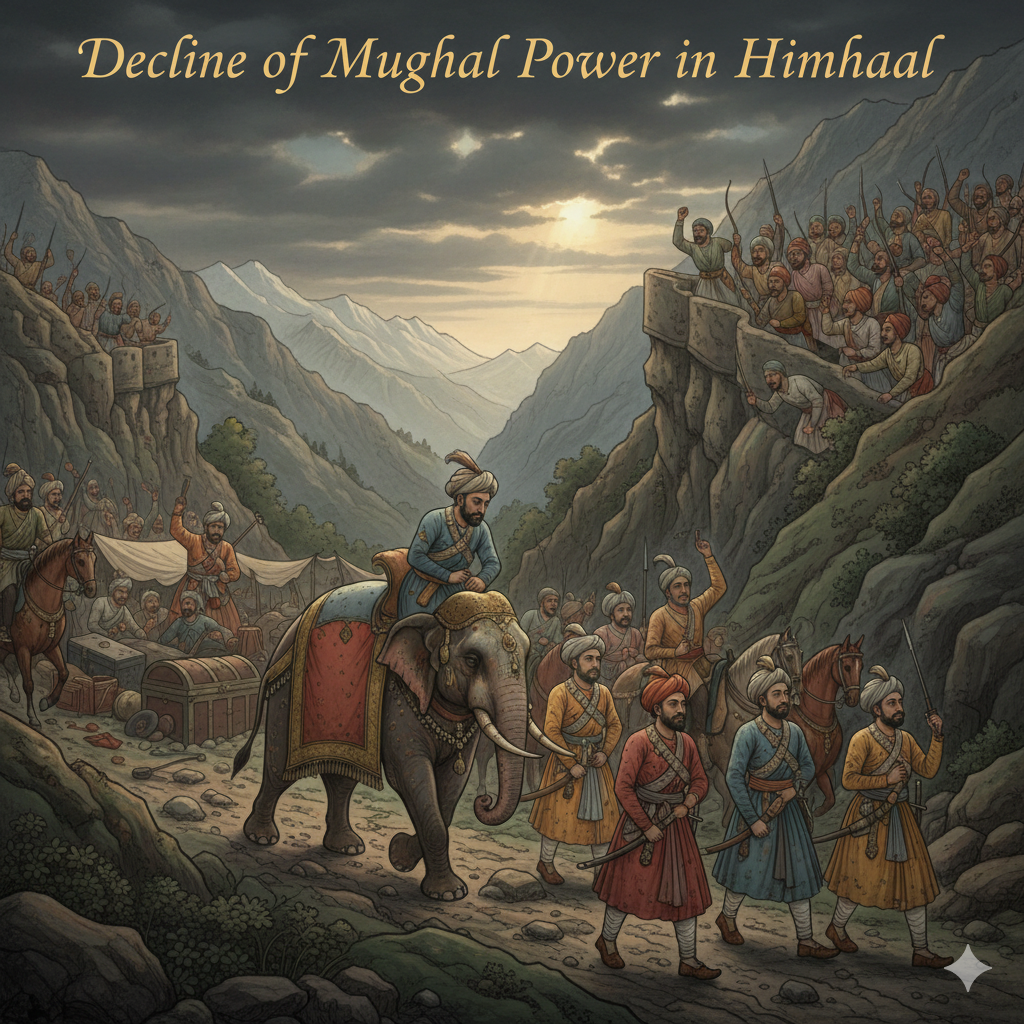
After Aurangzeb's death:

  • Mughal power weakened
  • Hill rulers regained control
  • Raja Sansar Chand of Kangra rose to power in 18th century
  • Mughal's fully lost Kangra region
✓ Kangra Fort was recaptured by local forces in 1786.

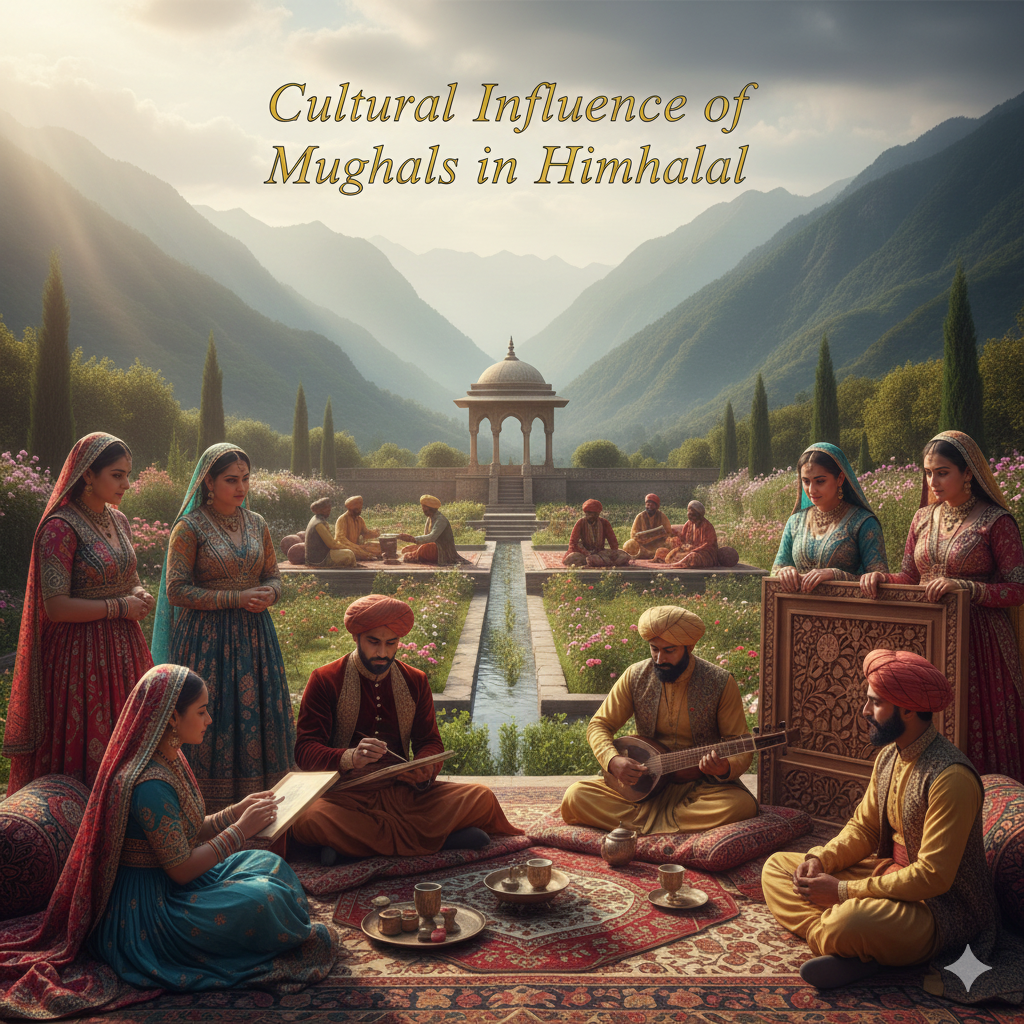
⭐8. Cultural Influence of Mughals in Himachal

Cultural influence of mughals in himachal.png

🎨Art and Miniature Paintings

  • Kangra school of art developed strong Mughal Influence
  • Use of fine lines, nature, Krishna themes

🛕Architecture

Some Mughal structures built around Kangra region.

🤝Hill-Mughal relations

Mostly political but sometimes friendly.


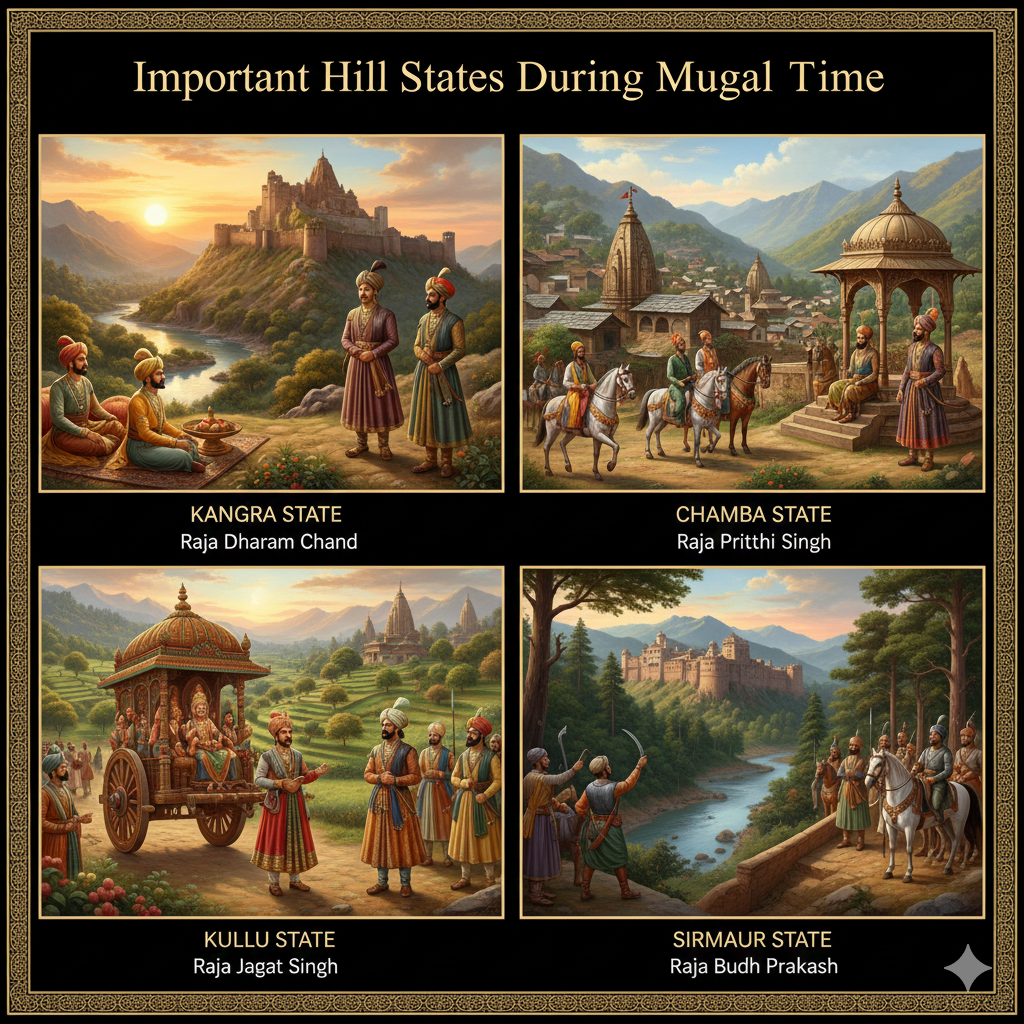
⭐9. Important Hill States During Mughal Time

important hill states during mughal time.png

✓ Kangra

Strongest state; Mughals tried hardest to control it.

✓ Chamba

Mentioned relations; flourished in art & architecture.

✓ Nurpur

Interacted with Mughals; some alliances were made.

✓ Sirmaur & Bilaspur

Provided support to Mughals at times.


⭐10. Very Important Exam Questions

Q1. Which Mughal emperor captured Kangra Fort?

→ Jehangir (in 1620)

Q2. Who tried to capture Kangra Fort but failed?

→ Akbar

Q3. When did Kangra Fort come out of Mughal control?

→ 1786

Q4. Which art style was influenced by the Mughals?

→ Kangra Miniature Painting

Q5. Which hill state was most important during Mughal period?

→ Kangra State

Q6. Who was the ruler of Kangra during Mughal time?

→ Katoch dynasty rulers

Q7. Which Mughal ruler's reign was peaceful in Himachal?

→Shah Jahan